Turn 1: Plains. Turn 2: Lotus Field. That's it. That's the dream. You just cast a land that taps for three mana of any color after sacrificing three other lands, and you're already thinking about how you're going to untap it and go off. In Vintage, that dream is very much alive. I've been piloting Jeskai Lotus in paper Vintage events for a while now, and the deck delivers on this fantasy more consistently than any combo list I've played.

The Combo in a Nutshell: From Humble Lands to Infinite Power
The core is simple: Lotus Field enters the battlefield, you sacrifice three other lands (or use effects to sacrifice them), and you've got three mana. But you need to untap it. That's where the engine comes in-Thespian Stage copies Lotus Field, Blood Sun shuts down the legend rule for your nonbasic lands, and Pore Over the Pages digs to find your pieces while drawing cards. Once you have infinite mana, Omniscience lets you cast anything from your hand for free, and you finish with a massive X spell or a wide board of creatures.
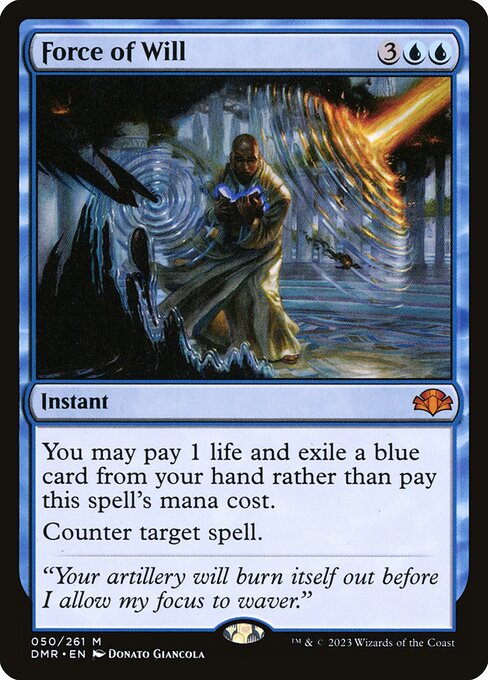
Let's break that down a bit. The beauty of this combo is its land-based nature. Lands are notoriously hard to interact with in Magic: The Gathering, especially compared to creatures or artifacts. This inherent resilience is a massive boon in a format as cutthroat as Vintage. The deck isn't just about assembling a few pieces; it's about building an unassailable mana engine that shrugs off most conventional forms of disruption. Imagine your opponent tapping out for a Force of Will to counter your win condition, only for you to have a dozen Lotus Fields ready to power through anything they throw at you. It's a truly spectacular feeling, and one that Jeskai Lotus Combo delivers consistently.
Key Cards That Make It Happen: The Synergy Superstars
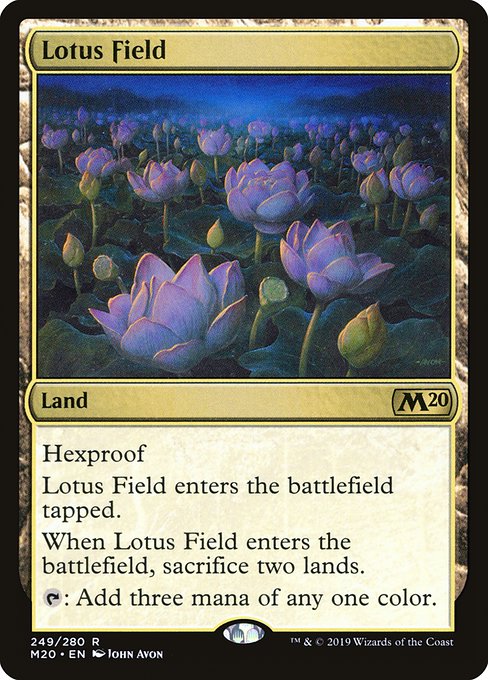
Lotus Field
The namesake card. A land that taps for three mana but requires sacrificing three lands. In Vintage, you have the mana fixing and sacrifice outlets to make this work. The beauty is that it's a land, so it dodges many removal spells, and once you have a Thespian Stage in play, you can have multiple copies generating insane mana. Lotus Field is the mana engine that powers the entire deck. It's the lynchpin, the foundation, the very heart of the operation. Without Lotus Field, there is no Jeskai Lotus Combo. It's a high-risk, high-reward land, but in Vintage, the rewards far outweigh the risks thanks to the sheer power of the supporting cast.
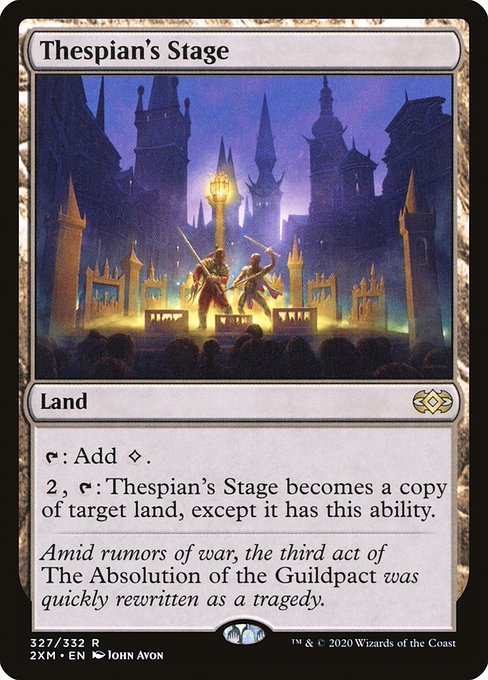
Thespian Stage
This is the copy machine. It enters as a copy of any land you control, including Lotus Field, and it's not legendary (well, it is legendary normally, but Blood Sun changes that). Actually, Thespian Stage is a legendary land, but with Blood Sun it becomes nonlegendary, so you can have multiple copies. More importantly, when it copies Lotus Field, it becomes another Lotus Field, effectively doubling your mana production. You can also copy it again to build a huge army of Lotus Fields. This card is nuts because it turns one Lotus Field into many. Think of it as a magical photocopier for mana. You put in one Lotus Field, and out comes another, then another, until you're swimming in mana. The interaction with Blood Sun is what elevates Thespian Stage from a merely good land to an absolutely broken combo piece. It's the reason you can go from three mana to effectively infinite mana in a single turn cycle.
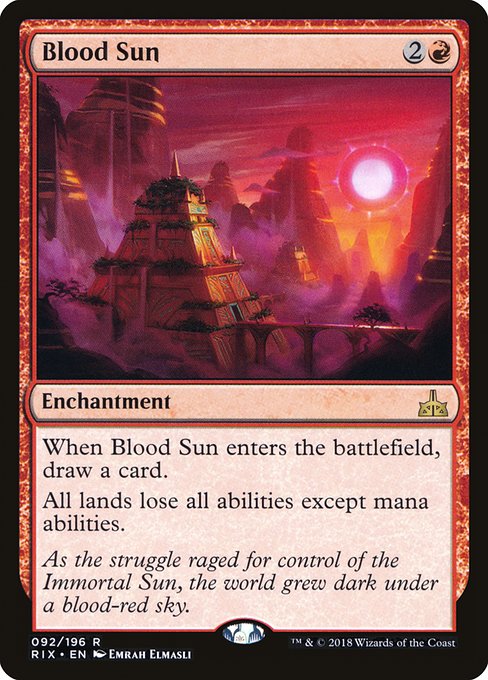
Blood Sun
Here's the glue that holds it together. Blood Sun is a 2-mana enchantment that says "Nonbasic lands you control aren't legendary." This means your Thespian Stages (which are normally legendary) won't kill each other. You can have as many Thespian Stages as you want, each copying Lotus Field. Without Blood Sun, you'd be stuck with one Thespian Stage at most. This card is essential to go wide with your mana sources. It's the unsung hero, the quiet enabler. Without Blood Sun, the entire Thespian Stage-Lotus Field engine grinds to a halt. It's a relatively cheap enchantment that completely breaks a fundamental rule of the game, allowing for truly absurd board states. The fact that it also shuts down opponent's nonbasic land abilities (like Strip Mine or Wasteland) is just gravy, a nice little bonus that adds to its power level.
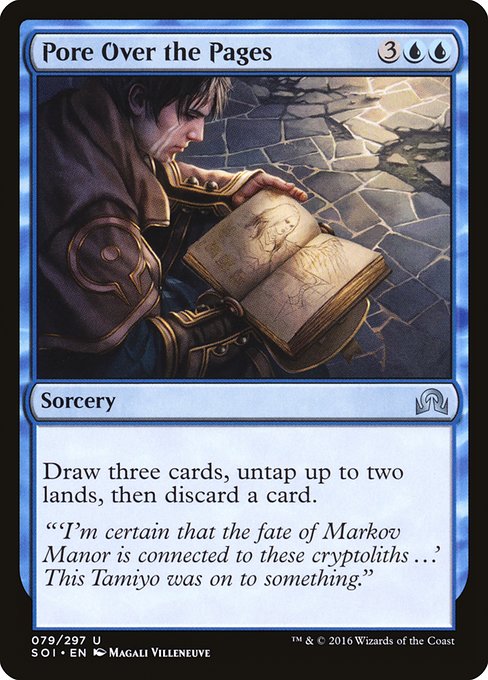
Pore Over the Pages
This is your card draw and selection. For 1U, you scry 2 and draw two cards. In a deck that needs to find its pieces, this is gas. It's also an instant, so you can cast it at the end of your opponent's turn to dig without committing to the combo right away. It replaces itself and helps you hit your payoff cards. Drawing extra cards is crucial when you're trying to assemble a five-card combo. While not flashy like the mana engine, Pore Over the Pages is the grease that keeps the gears turning. It ensures consistency, helping you sculpt your hand and find those crucial missing pieces. The instant speed is a huge advantage, allowing you to react to your opponent's actions or simply dig for answers during their end step, keeping your options open on your turn.
Omniscience
The finisher. With infinite mana, you cast this sorcery and then cast every card in your hand for free. Typically you'll have X spells like Crackle with Power or a bunch of creatures. Once Omniscience resolves, the game ends. It's a 7-mana blue sorcery, but with infinite mana that's irrelevant. Drawing Omniscience is often the last piece you need, and Pore Over the Pages can help you find it. This is the ultimate payoff. After all that intricate mana generation, Omniscience is the big red button that says "I win." The feeling of casting it, then casually dropping a Blightsteel Colossus or a lethal Crackle with Power for X=1,000,000, never gets old. It's a strong statement that your opponent's efforts were in vain, as you now have unlimited resources at your disposal.
Typical Turn Sequence: The Ideal Path to Victory
Turn 1: Play a basic, maybe a cantrip like Ponder or Brainstorm. Keep a hand with one of the key pieces. A Plains or Island is a common start. You might even drop a Mox Pearl or Mox Sapphire if you have one, just to accelerate your colored mana. The goal here is to set up your early game, scout your opponent's hand with a Thoughtseize if you're running it, or just dig for your combo pieces.
Turn 2: Drop Lotus Field, sacrifice three lands (your basics, or use a sacrifice outlet if you have one). You now have three mana available. This is where the magic begins. Sacrificing your early lands might feel bad, but the payoff is immense. Remember, Lotus Field itself provides three mana, which is often enough to cast a crucial cantrip or even a defensive spell.
Turn 3: Cast Thespian Stage as a copy of Lotus Field. You now have two Lotus Fields. Cast Pore Over the Pages to dig. Maybe find Blood Sun or another piece. With two Lotus Fields, you're now generating six mana per turn. This is usually enough to start aggressively digging for your remaining combo pieces or setting up protection. This is also a critical turn to consider your opponent's potential interaction. Do they have a Force of Will or Mental Misstep? Can you bait out their counterspells?
Turn 4: If you have Blood Sun, cast it. Then cast a tutor effect (like Vampiric Tutor or Mystical Tutor) to find an untap effect. Or use a card like Frantic Search to untap one of your Lotus Fields and draw cards. The goal is to generate infinite mana. This is the turn where you typically go off. With Blood Sun in play, your Thespian Stages can now copy Lotus Field without the legendary rule getting in the way. You can make multiple copies, generating truly absurd amounts of mana. Frantic Search is particularly potent here, as it untaps two lands (which can be two Lotus Fields) and draws two cards, often chaining into itself or other cantrips.
Turn 5: With infinite mana, cast Omniscience and then your win condition-usually a bunch of spells that deal damage or create a wide board. This is the victory lap. Once Omniscience resolves, the game is effectively over. You can cast every spell in your hand for free, draw your entire deck with a Gush or Ancestral Recall, and then finish your opponent off with a massive Crackle with Power or by putting a Blightsteel Colossus into play.
It's not always that clean, but that's the ideal. The deck can also win by just generating a huge amount of mana and casting a big X spell directly, or by using multiple Thespian Stages to create multiple Lotus Fields and just going wide with creatures. Sometimes, you don't even need Omniscience. If you have enough mana, a simple Stroke of Genius targeting your opponent for their entire library (plus one) is a perfectly valid win condition. The flexibility of the win conditions makes the deck incredibly potent.
Deckbuilding and Mana Base: The Foundation of Power
The mana base is crucial. You're playing Jeskai (blue, white, red) colors. You need to ensure you can cast Lotus Field on turn 2 reliably. That means plenty of blue sources and maybe some artifact lands or Moxen to accelerate. The deck often runs 4-5 Moxen (Mox Sapphire, Mox Jet, Mox Pearl, etc.) and the original duals and shocks. You also need ways to sacrifice lands, so cards like Lotus Field itself, or sacrifice outlets like Soul Exchange or Death-Breed, are helpful. But the deck can also just use Thespian Stage copying Lotus Field and Blood Sun to avoid needing to sacrifice more than three initially.
Let's delve deeper into the mana base. Beyond the obvious inclusion of the Power 9 (Moxen, Black Lotus), you'll want a healthy mix of original dual lands like Tundra, Volcanic Island, and Plateau to ensure you have access to all three colors. fetch lands like Flooded Strand and Scalding Tarn are essential for consistent mana fixing and thinning your deck. Some builds might even consider running Ancient Tomb or City of Traitors for explosive early mana, though they come with their own risks. The balance is delicate; you need enough lands to fuel Lotus Field's sacrifice clause, but not so many that you're consistently drawing non-action. This is where tools like our Mana Base Calculator can be incredibly helpful in fine-tuning your land count and color distribution. You also want a few basics to fetch early on, especially if you anticipate facing Wasteland or Strip Mine. The interaction between fetch lands, dual lands, and Lotus Field is a key part of the deck's early game strategy.
Beyond lands, the deck leverages other fast mana. Mana Crypt, Mana Vault, and Sol Ring are all staples of Vintage for a reason, and they shine here, helping you cast Blood Sun or early cantrips even faster. Remember, every turn you shave off the combo increases your chances of victory. No other deck generates mana this fast, and these artifacts only amplify that strength.
Interaction and Protection: Shielding Your Masterpiece
While the combo is resilient, it's not entirely immune. You need ways to protect your pieces and interact with your opponent. This is where blue's strength comes into play. Force of Will, Mental Misstep, and Flusterstorm are all prime candidates for protecting your combo or disrupting your opponent's attempts to stop you. Even a well-timed Spell Pierce can be enough to push through a critical spell. Some lists even experiment with cards like Defense Grid to make it harder for opponents to interact on your turn.
It's not just about counterspells, though. Sometimes, you need to clear the way. Swords to Plowshares or Path to Exile can deal with problematic creatures, while Pyroblast or Red Elemental Blast are excellent against other blue decks trying to counter you. The deck's Jeskai colors give it access to a wide range of strong interaction, allowing it to adapt to various threats. The key is knowing when to hold up protection and when to commit to the combo. This is where experience with the deck truly pays off.
Sideboard and Matchups: Adapting to the Vintage Metagame
Against control, you bring in more instant-speed interaction to protect your combo. Cards like Force of Will, Daze, and Spell Pierce are key. Against aggro, you might bring in wraths or defensive cards. The deck can also board into a more midrange plan with cards like Snapcaster Mage and Lightning Bolt to grind. The sideboard is flexible, but you need to preserve the core combo while adding hate for specific archetypes.
Let's talk specifics. Against other combo decks, you might want more disruptive elements like Sphere of Resistance or Thorn of Amethyst to slow them down, buying yourself precious turns. Against Gush-based blue decks, the aforementioned Pyroblast and Red Elemental Blast are gold. For creature-heavy aggro strategies, cards like Supreme Verdict or Terminus can reset the board and give you time to assemble your combo. Some players even include a few copies of Leyline of Sanctity to protect against discard spells or targeted burn. The sideboard is your toolbox, and Vintage is a format where having the right tool for the job wins games. Don't be afraid to experiment with niche hate cards that address specific threats in your local meta. Understanding your draw odds for these sideboard cards is also critical, and
Why This Deck Works in Vintage: The Power of Unrestricted Magic
Vintage allows the most strong cards ever printed. Moxen, Lotus Petal, Yawgmoth's Will-these help accelerate the combo. The card draw is insane with Ponder, Brainstorm, and Pore Over the Pages. The deck doesn't rely on the stack to protect itself as much as other combo decks; it's more about getting a board state that's hard to interact with. Blood Sun and Thespian Stage make the combo resilient. Once you have two Lotus Fields and Blood Sun, your opponent needs to destroy both Lotus Fields (which are lands) and Blood Sun to stop you. That's a tall order, especially with all the free mana you have to protect it.
The sheer velocity and power available in Vintage are what make this deck not just viable, but dominant. The ability to play multiple fast mana artifacts on turn one, followed by a Lotus Field on turn two, creates an undeniable tempo advantage. Beyond that, the tutors available in Vintage (Demonic Tutor, Vampiric Tutor, Mystical Tutor, Imperial Seal) mean that assembling the combo is far more consistent than it would be in other formats. You're not just hoping to draw your pieces; you're actively searching for them and putting them into your hand. This consistency, combined with the inherent resilience of land-based strategies, makes Jeskai Lotus Combo a truly terrifying force to behold.
Think about the alternative: most combo decks rely on fragile creatures or artifacts that can be easily removed. Lotus Field, being a land, dodges most creature and artifact removal. And while Blood Sun is an enchantment, it's cheap to cast and often comes down before your opponent has much opportunity to interact. The synergy between the cards is so strong that even a single piece resolving can set you up for a win. It's proof of the power of Vintage that such a convoluted-sounding combo can be so effective and consistent.
Evolving the Archetype: New Tech and Future Prospects
The Jeskai Lotus Combo deck is a beast in Vintage. It's explosive, consistent, and often kills by turn 4 or 5. It doesn't care about your life total; it's all about assembling the pieces and going off. If you're looking for a combo deck that's resilient and can win out of nowhere, this is it. The deck is still evolving-players are finding new builds, adding cards like Paradox Engine or more tutors. But the core five cards are the heart, and they're as nuts as they look. Try it at your next Vintage event, and watch your opponents' jaws drop when you tap for 12 mana on turn 4.
The beauty of Vintage is its constantly shifting metagame and the endless possibilities for innovation. While the core of Jeskai Lotus Combo remains constant, players are always looking for ways to optimize and improve. Cards like Urza's Saga have even found their way into some lists, providing a consistent way to tutor for artifacts like Sol Ring or Mana Crypt, and even generating constructs to act as an alternate win condition or defensive measure. The discussion around including cards like Wishclaw Talisman for additional tutoring, or even specialized untap effects like Candelabra of Tawnos (though exceedingly rare and expensive) continues to evolve. Some builds might lean heavier into the red splash for cards like Wheel of Fortune or Timetwister to refuel their hand after a big mana turn, while others might focus on more defensive white cards to protect the combo.
The future of Jeskai Lotus Combo in Vintage looks bright. As long as Lotus Field, Thespian Stage, and Blood Sun exist, this archetype will be a force to be reckoned with. Its unique blend of resilience, explosiveness, and consistency makes it a top-tier contender in the format. this deck offers a truly exhilarating and strong Magic experience. So sleeve it up, practice your lines, and prepare to unleash the infinite mana beast!
Try it yourself: